Blog · How-to
How is a Halo H30 node commissioned and calibrated before a site trusts its measurements?
A walk through the six-step commissioning checklist a Halo Deployment Technician works on site, from the mount survey to the Atlas baseline capture, using the Port of Halvard Berth 3 commissioning as the worked example.
A Halo H30 node is commissioned in six steps, in order: the mount is verified against the site survey, PoE++ power and link are confirmed, the node is enrolled in Sentinel with a signed device identity, its timestamp is synchronised within tolerance, it is calibrated against a target board to ±5 mm at 40 m, and Atlas captures a 30-minute baseline. A node is accepted only when every step is done and its calibration record is stored. Until then it reports, but nothing on the site plans from it.
Priya Ashford · COO, Sirdar Systems · · 4 min read
Last updated
What does commissioning a Halo node actually mean?
It means turning a mounted sensor into a measurement the site can cite.
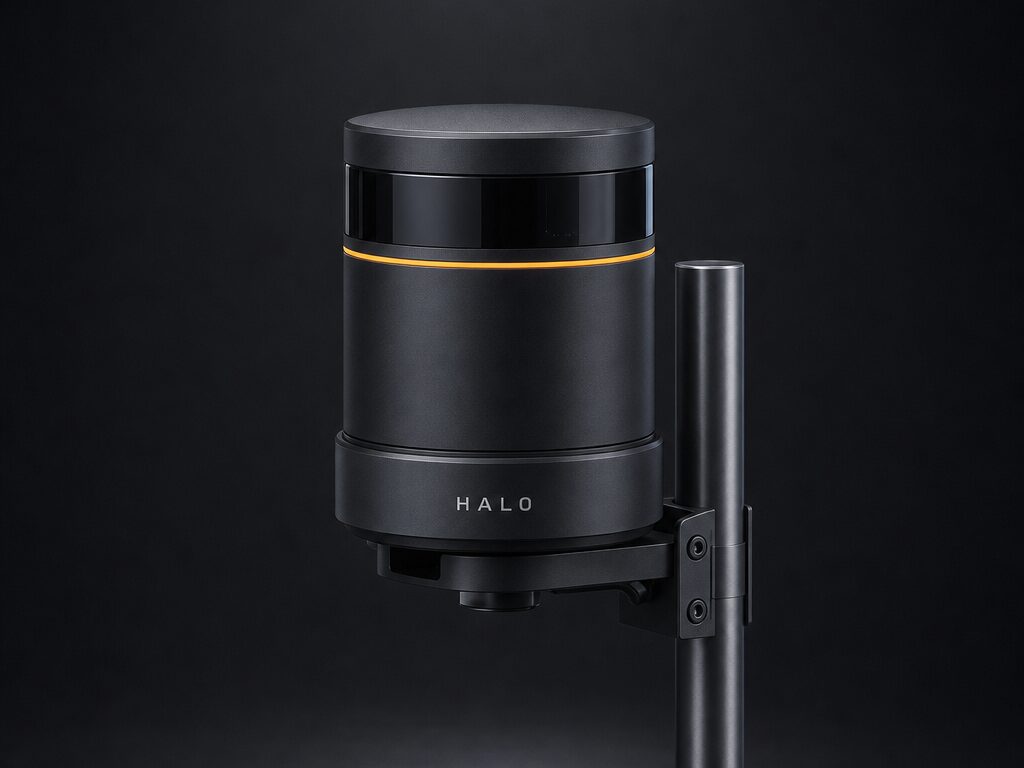
A Halo H30 fuses LiDAR, radar and 4K optical on a 30 TOPS on-node processor and is rated to ±5 mm at 40 m. Mounting it is the easy part. Commissioning is the sequence that proves the node, on this pole, at this temperature, on this network, is producing measurements inside that tolerance, and that the proof is recorded.
Sirdar's Halo commissioning screen shows the sequence as a checklist. It is the same six steps on every site.
Which six steps does the checklist contain?
- Mount verified against survey. The technician confirms the node sits where the survey says it should, on the mount type the survey specified (pole or wall). At Port of Halvard Berth 3 the survey reference is SRV-HLV3-2026-09.
- PoE++ power and link. The H30 takes PoE++ or 48 V DC. The step passes when the node has stable power and a link to the site network.
- Sentinel enrolment. The node receives a signed device identity. From this point it is a known device, and a policy applies to it.
- Timestamp sync within tolerance. The node locks to the site's PTP grandmaster. At Berth 3 the grandmaster is GNSS-disciplined, the tolerance is 500 ns and the recorded offset at the time of writing was 84 ns.
- Target-board calibration ±5 mm at 40 m. The technician places a target board at range and the node measures it repeatedly. The readout shows the target range, the measured range and the deviation in millimetres.
- Atlas baseline capture. For 30 minutes the node observes the site so that Atlas has a known-good starting point for that node's field of view.
What does a calibration readout look like?
Numbers, at 20 samples a second.
Node H30-HLV3-05 at Berth 3, mid-calibration, read a target at 39.9 m, measured 39.9031 m, and reported a deviation of 3.1 mm against a 5 mm tolerance. The board temperature was 41 °C with ambient at 17 °C. The last dozen samples sat between 2.8 and 3.4 mm.
The technician is not looking for a single good number. They are looking for a stable residual across the samples. A residual that drifts while the board warms up is a node that will drift on a hot afternoon.
Why does the order of the steps matter?
Because each step is evidence for the next.
Calibration before time sync produces a measurement with no trustworthy timestamp, which Atlas cannot align with the other nodes. Baseline capture before calibration teaches Atlas an offset it will later have to unlearn. Enrolment after everything else means a device was on the network, unidentified, while it was being configured. The checklist is ordered so that a node is known, powered, timed and measured before it is believed.
What happens to the record afterwards?
It becomes part of the site's safety evidence.
Every accepted node carries a timestamped record of its references, residuals and acceptance decision. The signed safety case for a Kinetic fleet cites those records to show the site is measured rather than assumed. Tanjung Terminals, whose partner Orbit Bay Distribution commissioned Halo across 12 measured sites, describes the benefit in a sentence: measurements arrive with a traceable calibration record.
How does a partner stage a multi-node site?
Node by node, with the states visible to everyone.
At Berth 3 the commissioning partner, Northgate Technologies, was working eight nodes on Halo firmware 5.2 at the time of writing. Six were commissioned with calibration passed, with deviations between 2.1 and 4.6 mm. One was mid-calibration. Two were pending, mounted but not yet started. The commissioning screen shows exactly that, so the port's engineers and the partner share one view of what is measured and what is not.
What should a site owner ask before accepting a Halo installation?
Four questions.
- Can I see the calibration record for each node, with the deviation and the date?
- Was every node enrolled in Sentinel before it was calibrated?
- What is the time-sync offset, and what tolerance was it accepted against?
- Has Atlas captured a baseline for every node, and which Atlas version did it feed?
A Halo Deployment Technician will have the answers on the commissioning screen. If they do not, the installation is not finished.
Last updated 2026-09-30.
Questions and answers
- How accurate is a Halo H30 node?
- The H30 is rated to ±5 mm at 40 m. Calibration measures a target board at range and records the deviation; nodes at Port of Halvard Berth 3 read between 2.1 and 4.6 mm at acceptance.
- How long does Halo commissioning take per node?
- The Atlas baseline capture alone is 30 minutes per node. The other five steps depend on the site, so partners plan commissioning per node rather than per day.
- Does a Halo node need Sentinel?
- Yes. Sentinel enrolment, which gives the node a signed device identity, is the third step of the checklist and happens before calibration.
- What is the time-sync requirement?
- The node locks to the site's PTP grandmaster within a stated tolerance. At Berth 3 the tolerance is 500 ns and the recorded offset was 84 ns.
#Halo #Commissioning #Calibration #How-to
Related articles
Operations
How do you keep an installed fleet measured and protected? Sensor maintenance and site security after commissioning
What changes after the robots are in service: keeping Halo nodes calibrated, keeping the Atlas model current and keeping Sentinel watching the segments that matter.
Soren Avelar · Chief Technology Officer, Sirdar Systems · · 4 min read

Partners
How do partners get installed Kinetic robots into service faster?
The commissioning sequence Sirdar partners follow from a stocked unit to unattended operation, and where the days are usually lost.
Talia Renwick · EVP Global Channel, Sirdar Systems · · 4 min read

Buyer guides
Which Sirdar product line fits your site? Kinetic, Halo, Atlas, Aether and Sentinel compared
A buyer's guide to the five Sirdar product lines: what each one does, which sites need which, and how the pieces fit together on one network.
Sadia Morales · Chief Product Officer, Sirdar Systems · · 4 min read