Blog · Buyer guides
Which Sirdar product line fits your site? Kinetic, Halo, Atlas, Aether and Sentinel compared
A buyer's guide to the five Sirdar product lines: what each one does, which sites need which, and how the pieces fit together on one network.
Start from the work the site needs done. Kinetic does physical work (mobile manipulation). Halo measures the site. Atlas keeps a living 3D model of it. Aether plans the shift and dispatches approved work to Kinetic. Sentinel is the security layer inside every Sirdar site and is also sold on its own. Most sites begin with Halo and Sentinel, add Atlas when the model must stay current, add Kinetic when there is repeatable physical work, and add Aether when more than one fleet or building needs one plan.
Sadia Morales · Chief Product Officer, Sirdar Systems · · 4 min read
Last updated
What does each Sirdar product line do?
Sirdar sells five product lines. Four of them run a site. One protects it.
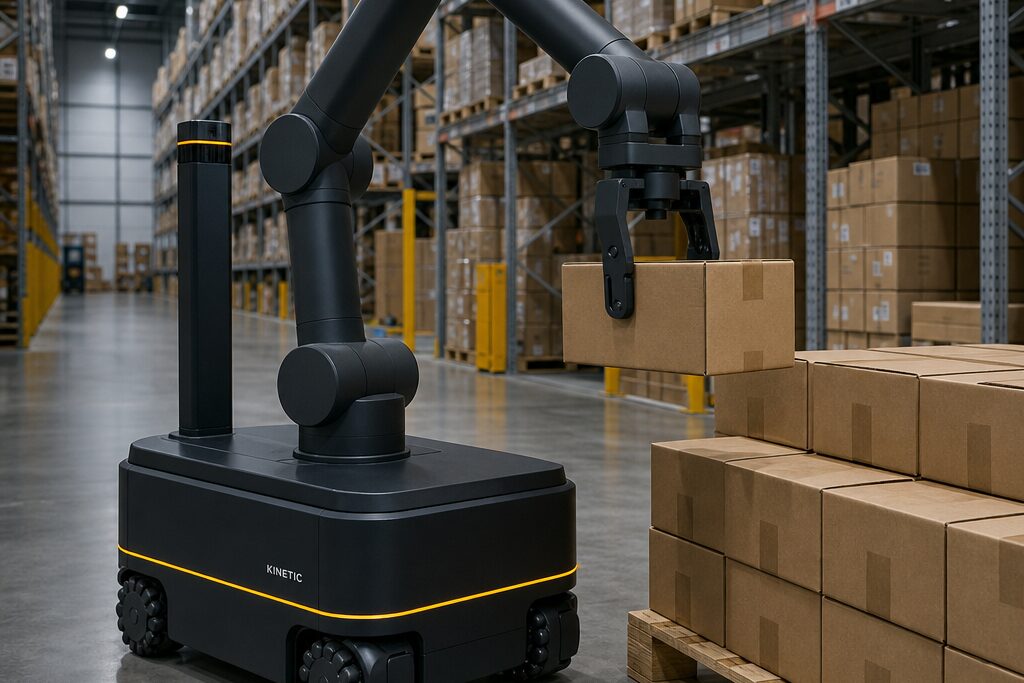
Kinetic is mobile manipulation. The Kinetic M4 is an omnidirectional base with a six-axis arm, a 25 kg payload at 1.4 m reach and 12 hours of runtime on a hot-swap battery. Up to 48 M4 units run under one Kinetic FC-1 fleet controller per site.
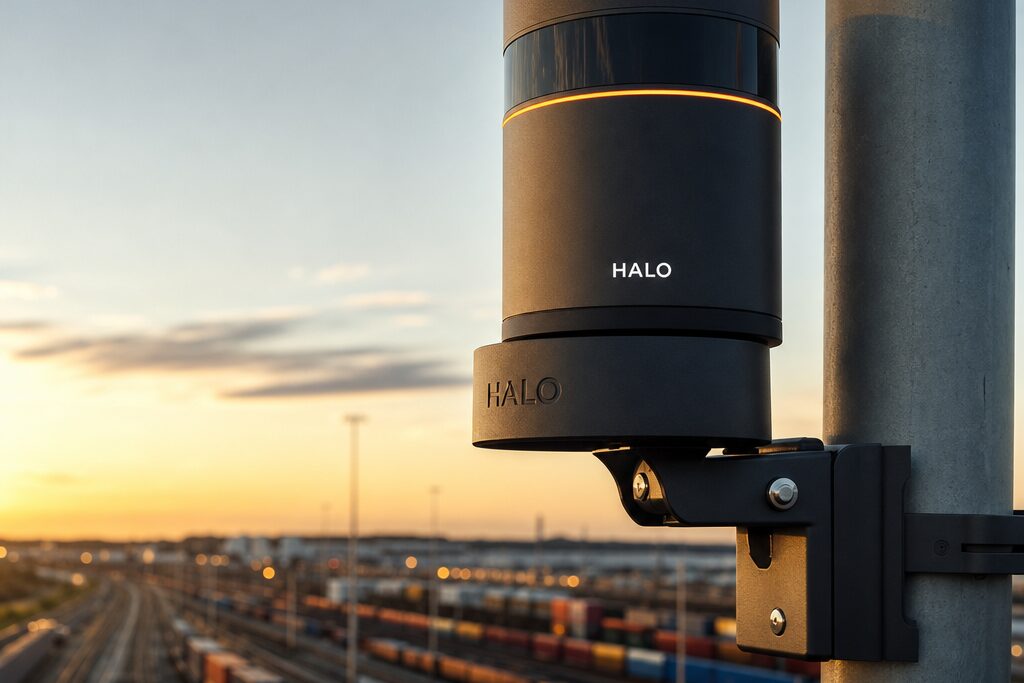
Halo is precision site measurement at the edge. A Halo H30 inference node fuses LiDAR, radar and 4K optical into one calibrated measurement, accurate to ±5 mm at 40 m, from minus thirty to sixty degrees Celsius.
Atlas is the living 3D model of the site. It is learned from Halo and Kinetic observations and carries lineage on every version, so a plan can always be traced to the observations that shaped it.
Aether is the planning layer. Aether agents plan site operations, resolve exceptions and dispatch approved actions to Kinetic fleets. Every dispatch has a human override.
Sentinel is the security Sirdar built for its own robots: endpoint protection, operational technology (OT) visibility and investigation timelines from one console. It ships inside every Kinetic unit, FC-1 controller and Halo node from the factory, and it is sold on its own for any site.
Which product line should a site start with?
Start with the question the site is trying to answer.
If the question is "what is the condition of the site right now?", start with Halo. Energy and utility customers such as Caledon Grid run Halo, Atlas and Sentinel across 45 monitored sites and report 19% faster inspections. No robots are involved.
If the question is "who is moving what across our network?", start with Sentinel. It understands Modbus TCP, OPC UA, EtherNet/IP, PROFINET and DNP3 natively, so crane, reefer and switchgear segments are visible without a second tool.
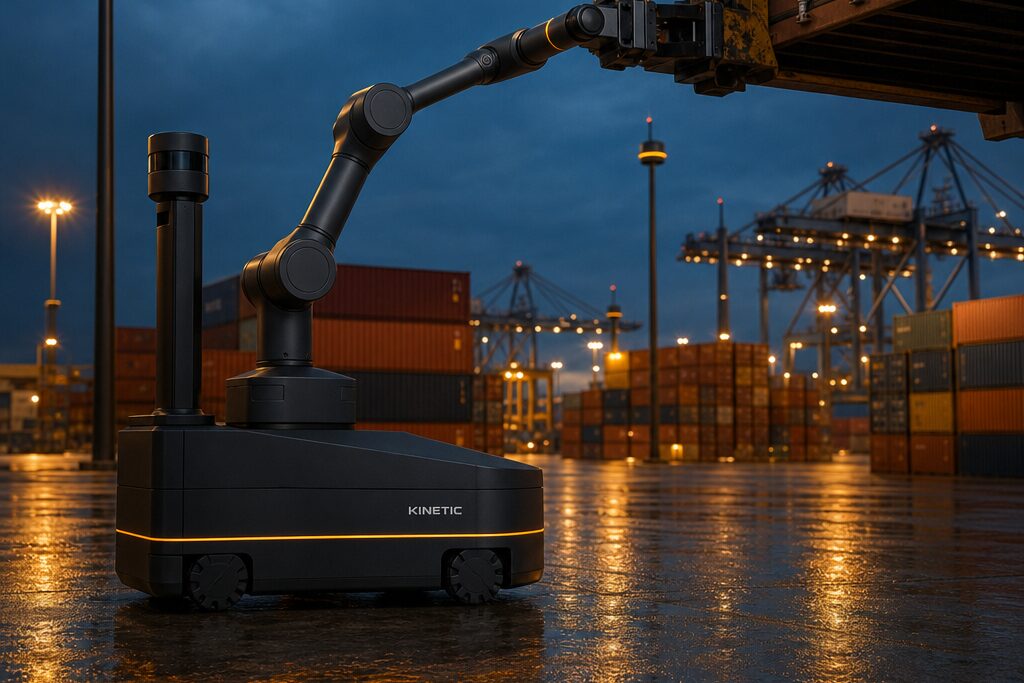
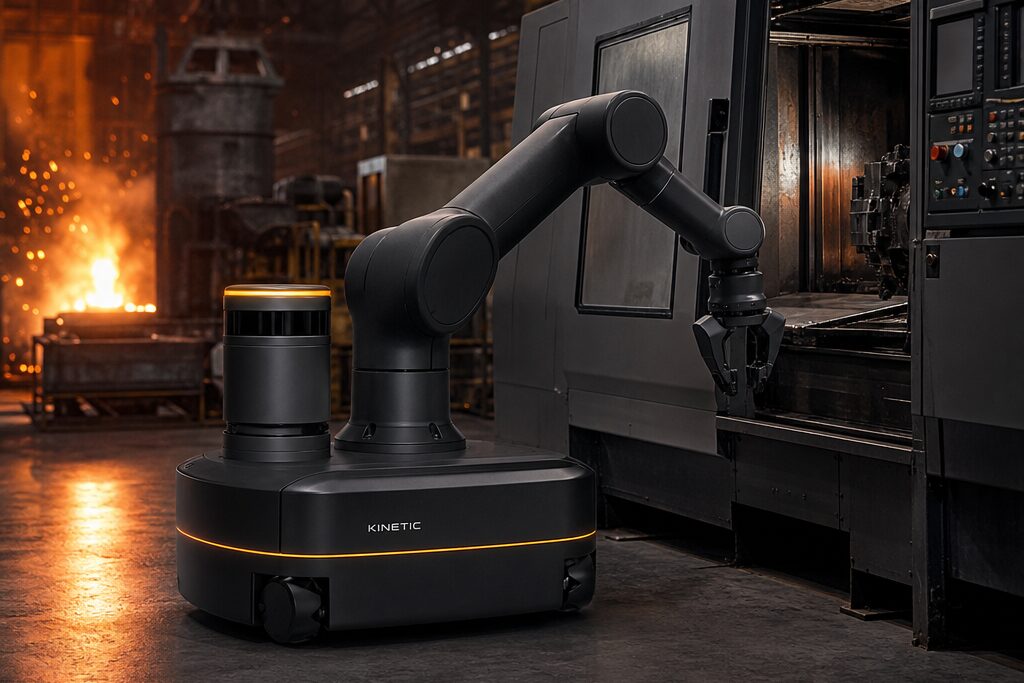
If the question is "how do we get repeatable physical work off our people?", start with Kinetic. Machine tending, twist-lock handling, tote and billet moves and seal inspections are the tasks the M4 was built for.
If the question is "how do we run many buildings from one plan?", you need Aether on top of Kinetic, and Atlas underneath both. Meridian Freight connects 38 sites this way and reports 22% faster loading.
When does a site need Atlas?
A site needs Atlas when the physical layout changes often enough that a static drawing is wrong by the time it is printed.
Nordvik Steel is the clearest example. Every fixture change on the mill floor becomes a new Atlas version with lineage. That keeps the safety case for its Kinetic units traceable to the floor as it is today, not as it was at commissioning. The plant reports 26% faster machine tending and 31% fewer stoppages.
Atlas is priced on measured usage within a customer-approved scope. Your partner sets that scope with you before the first model is trained. It is never a fixed line.
When does a site need Aether?
A site needs Aether when the plan for the shift is the bottleneck, not the robots.
Aether re-plans the shift as trailers arrive or vessels berth and raises exceptions to an operator seat instead of guessing. An operator seat is a person who can approve, override and re-plan. A deployed agent is a bounded planner with a named scope: a berth, a cell, a loading dock.
A single machine-tending cell rarely needs Aether. A port with cranes, reefers and a gate almost always does.
How do the five lines fit together?
Observations flow up. Halo nodes and Kinetic units observe the site and feed Atlas. Atlas keeps the model current. Aether reads the model, plans the work and proposes dispatches. An operator approves. Kinetic does the work. Sentinel wraps every layer, from the sensor to the safety case.
You can buy the lines separately. The Port of Halvard runs Kinetic, Halo and Sentinel with no Aether; Tanjung Terminals runs Halo, Atlas and Sentinel with no Kinetic. Both are complete deployments.
Who helps you choose?
A certified partner. Sirdar does not sell direct and never has. Every site is quoted, installed and supported by a partner from the Sirdar Partner Network, which today counts 224 partners in 7 regions. The partner knows your site better than we do and quotes the configured site from the current list prices.
Last updated 2026-09-30.
Questions and answers
- Can I buy Sentinel without any Sirdar robots?
- Yes. Sentinel started as a standalone product and still sells on its own, in three tiers (Essentials, Professional and Enterprise) with the optional EN-200 edge node for thin networks.
- Do I need Aether to run Kinetic robots?
- No. Kinetic Autonomy ships enabled for supervised operation under the FC-1 fleet controller. Aether adds cross-fleet and cross-building planning with an operator seat approving each dispatch.
- Is Atlas required for Halo?
- No. Halo nodes deliver calibrated measurements on their own. Atlas adds a living 3D model with version lineage, which matters when the layout changes often or a safety case must stay traceable.
- How many Kinetic units can one site run?
- Up to 48 Kinetic M4 units per FC-1 fleet controller, under one signed safety case.
- Can Sirdar sell to me directly?
- No. Sirdar moved to 100% channel sales in 2018. A certified partner quotes, installs and supports every site.
#Product selection #Kinetic #Halo #Atlas #Sentinel
Related articles
Operations
How do you keep an installed fleet measured and protected? Sensor maintenance and site security after commissioning
What changes after the robots are in service: keeping Halo nodes calibrated, keeping the Atlas model current and keeping Sentinel watching the segments that matter.
Soren Avelar · Chief Technology Officer, Sirdar Systems · · 4 min read
Buyer guides
What does a certified Sirdar partner mean for a buyer?
The Sirdar Partner Network's tiers and specializations, explained from the buyer's side of the table: what a badge proves, what it does not, and how to read a partner's profile.
Marin Vale · Chief Revenue Officer, Sirdar Systems · · 4 min read
Explainers
What is a signed safety case, and why does a robot fleet need one before it runs unattended?
An explainer for buyers and site leaders: what a safety case contains, who signs it, which standards sit behind it and what changes on site once it is signed.
Minh Adebayo · Chief Safety Officer, Sirdar Systems · · 4 min read